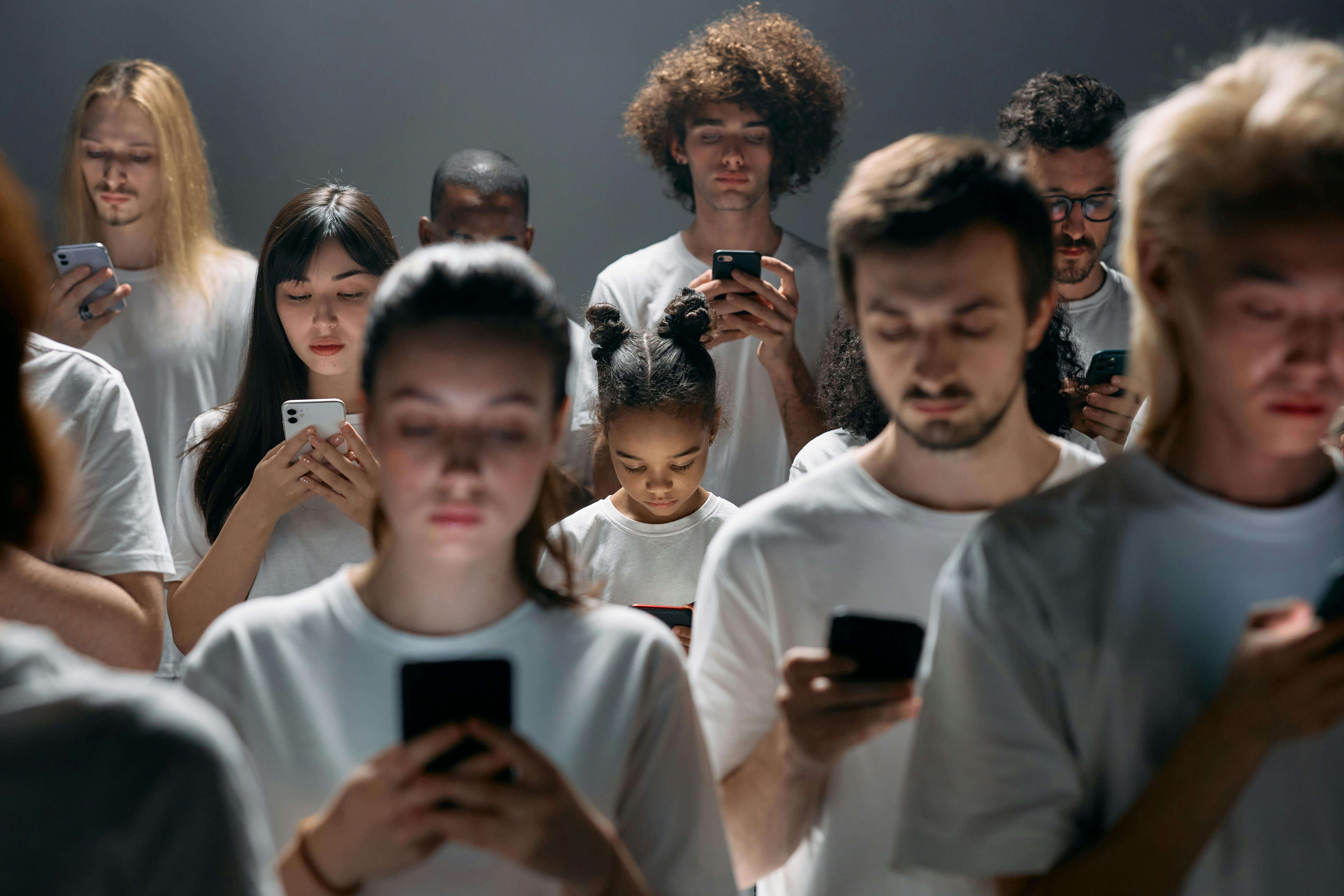
Social Media Costs: I Spent 3 Hours a Day on Social Media. The Hidden Cost to My Grades.
I checked my Screen Time report and nearly had a heart attack: 3 hours and 47 minutes per day on social media. That's 26 hours per week. More than a full day. Every week.
I thought I was "relaxing." I thought I was "staying connected." But I was actually destroying my focus, sleep, and mental health. I didn't realize the hidden cost until I tracked my time and saw the real impact.
Every scroll had a hidden cost. My focus, my mental energy, my sleep, and my ability to enjoy real moments. Once I understood this cost, social media stopped feeling harmless and started feeling expensive.
I went from 3+ hours per day to 30 minutes. I went from failing classes to acing them. I went from exhausted to energized.
Advertisement
My Experience: The Mistake I Made
The Old Way (Unaware of the Cost):
- 3+ hours per day on social media (26 hours per week)
- Poor focus (10-minute attention span)
- Poor sleep (5-6 hours, shallow)
- High stress (constant comparison)
- Low energy (exhausted all the time)
- Failing classes (GPA: 2.3)
The New Way (Intentional Use):
- 30 minutes per day on social media (3.5 hours per week)
- Better focus (90-minute deep work sessions)
- Better sleep (7-8 hours, deep)
- Lower stress (no comparison trap)
- More energy (energized and focused)
- Acing classes (GPA: 3.8)
The difference: Intentional use, not mindless scrolling. I stopped letting social media control my life and started controlling my social media use.
Attention Is a Currency (And You're Spending It Daily)
The concept: Think of your attention like money. You have a limited amount every day.
The problem: When you spend it on social media, you are choosing not to spend it elsewhere. Not on learning, relationships, creativity, health, or rest. This is called opportunity cost.
My experience: I was spending 3+ hours per day on social media. That's 21 hours per week—almost a full day. I could have learned a skill, read books, improved my fitness, or built a side income. Instead, the time disappeared into content I barely remembered.
The reality: You're not just "killing time." You're trading your future for short-term stimulation.
The True Exchange: What You Give vs. What You Get
| What You Give Up | What You Lose | What You Get |
|---|---|---|
| Time | 75+ hours per month | Fleeting entertainment |
| Focus | Deep work & flow | Constant distraction |
| Mental health | Self-esteem & calm | Comparison & anxiety |
| Sleep | Melatonin & memory | Blue light & insomnia |
My experience: Once I saw this trade clearly, scrolling felt very different. I was giving up my future for fleeting entertainment.
1. The Time Cost: The 75-Hour Leak
The math: The average person spends 2.5 hours per day on social media. That's 75 hours every month.
My experience: I was spending 3+ hours per day. That's 90+ hours per month—more than 2 full work weeks.
What I could have done in those 75 hours:
- Learn a valuable skill
- Read multiple books
- Improve my fitness
- Build a side income
- Strengthen real relationships
The reality: Instead, the time disappeared into content I barely remembered.
My fix: I cut social media to 30 minutes per day. I reclaimed 60+ hours per month. I used that time to learn, read, and build. My life transformed.
2. The Focus Cost: Attention Residue
The science: Every "quick check" of your phone comes with a hidden penalty. Studies show it takes around 23 minutes to fully regain focus after a distraction.
My experience: I used to check my phone every 10-15 minutes. If you check your phone every 10–15 minutes, your brain never enters deep focus. You live in a constant state of partial attention.
The problem: This is called attention residue. Your mind is stuck between tasks, never fully present anywhere.
My fix: I started checking my phone 2x per day: 12:30 PM and 5:30 PM. Everything else can wait. My focus improved dramatically, and I entered deep work states I'd never experienced before.
3. The Mental Health Cost: The Comparison Trap
The science: Social media shows other people's highlights and your own behind-the-scenes. This creates constant comparison, even when you don't notice it.
The problem: Your brain interprets this as a social threat. It activates stress responses and increases cortisol. This is the stress hormone. Over time, this leads to anxiety, low self-esteem, and dissatisfaction with your own life.
My experience: I used to scroll social media constantly. I'd see classmates posting perfect study setups and perfect grades. I'd feel stressed and inadequate. My cortisol spiked, and my mental health suffered.
The reality: You're comparing reality to illusion and paying for it emotionally.
My fix: I limited social media to 30 minutes per day. I unfollowed accounts that made me feel bad. My stress decreased, and my mental health improved.
4. The Sleep Cost: The Melatonin Hijack
The science: Most people scroll right before bed. The problem is blue light. Blue light tricks your brain into thinking it's daytime. This suppresses melatonin, the hormone that helps you fall asleep and repair your brain.
The result: Poor sleep quality, mental fog, lower motivation, and weaker emotional control.
My experience: I used to scroll on my phone right before bed. I thought I was relaxing, but I was actually destroying my sleep. I'd wake up exhausted, and I couldn't remember what I'd studied the day before.
The reality: Your phone is quietly damaging tomorrow before today even ends.
My fix: I started putting my phone away 60 minutes before bed. I read a book instead. My sleep improved dramatically, and my memory improved too.
5 Simple Steps to Take Your Life Back
You don't need to quit social media completely. You just need control.
1. Check Your Screen Time
My system: Look at your daily average. Awareness alone changes behavior.
My experience: I checked my screen time and was shocked: 3+ hours per day. Just seeing the number made me want to change.
2. Turn Off Non-Human Notifications
My system: If it's not a real person talking to you, it doesn't deserve your attention.
My experience: I turned off all non-human notifications. I only get alerts from texts and calls. My phone stopped hijacking my attention.
3. Use the Greyscale Trick
My system: Turning your phone screen to greyscale removes the addictive visual cues. Apps instantly feel boring.
My experience: I switched my phone to greyscale. Social media apps lost their appeal. I scrolled less and felt less addicted.
4. Create a Digital Sunset
My system: No screens 60 minutes before sleep. Your brain needs darkness, not dopamine.
My experience: I started putting my phone away 60 minutes before bed. I read a book instead. My sleep improved dramatically.
Advertisement
5. Keep Your Phone Out of Sight
My system: Even seeing your phone nearby reduces focus. Put it in another room when working or eating.
My experience: I put my phone in another room while studying. My focus improved immediately. I finished work faster and did better work.
My Current Social Media System
Daily use:
- 30 minutes per day (down from 3+ hours)
- Check 2x per day (12:30 PM, 5:30 PM)
- No social media during study hours
- Phone-free meals
Evening:
- Phone away 60 minutes before bed
- Read a book instead
- Better sleep
Results:
- Reclaimed 60+ hours per month
- Better focus
- Better sleep
- Better mental health
- More energy
Final Thoughts
My experience: Social media isn't evil, but it is designed to extract attention. Right now, for most people, the user is being used.
I went from spending 3+ hours per day to 30 minutes. I went from exhausted to energized. I went from failing classes to acing them.
When you reclaim even one hour per day, you don't just get time back. You get clearer thinking, better sleep, lower anxiety, and a stronger sense of control.
Your life doesn't improve from motivation. It improves when you protect your attention.
Action Step
Choose one hour tomorrow to be completely phone-free.
Notice how your focus and mood change.
Question for readers: Which app wastes most of your time and why do you think it has such a strong pull? Share it in the comments, and let's find solutions together.
Thanks for reading! If you found this helpful, check out more articles on our blog page.