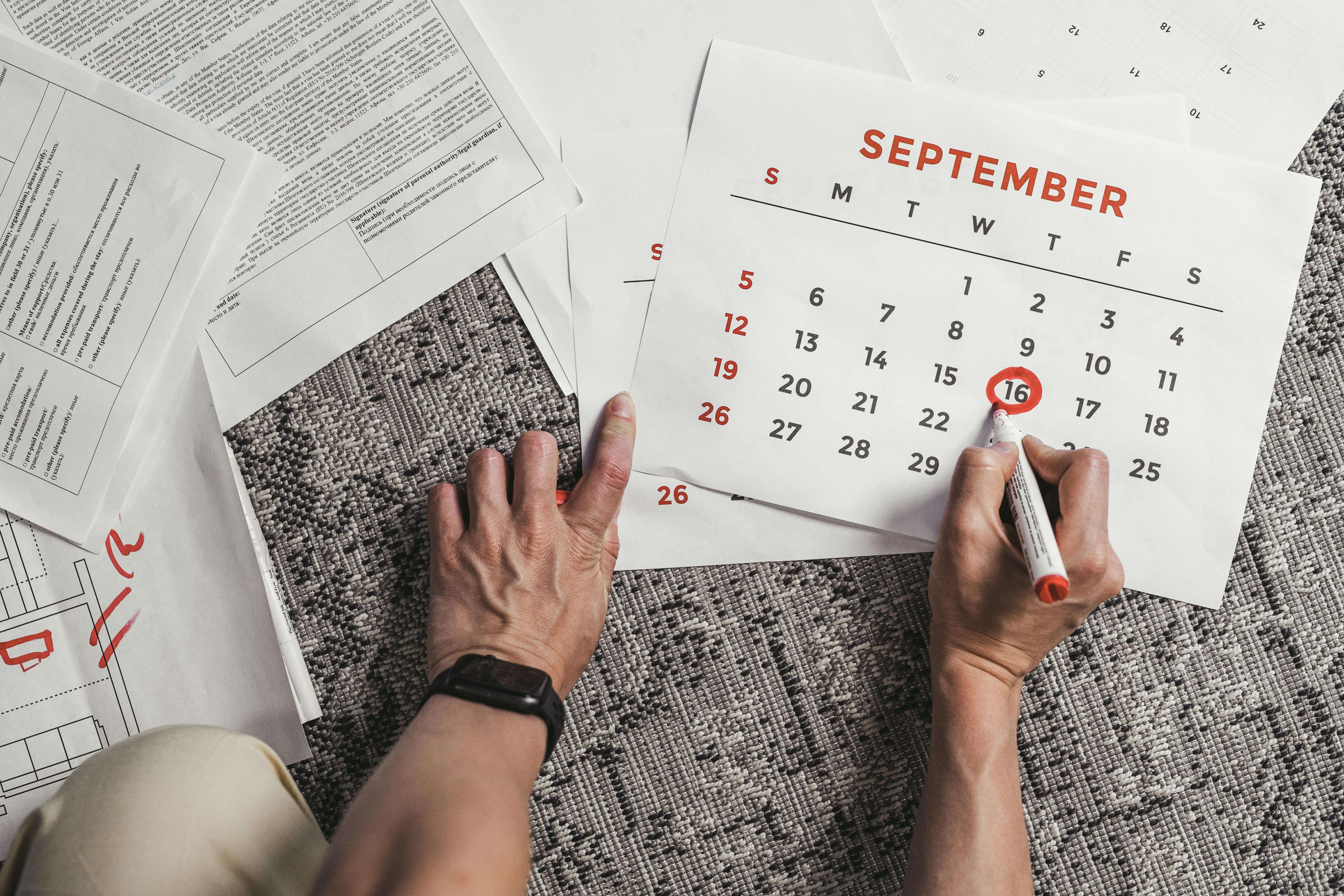
Work-Life Balance: I Worked 12-Hour Days But Accomplished Nothing. Here's How Pros Organize Their Schedule.
At 6 PM, I looked at my to-do list. I'd been busy all day—answering emails, attending meetings, doing small tasks—but I hadn't moved the needle on my biggest goals. I was exhausted, but I hadn't accomplished anything meaningful.
This was my life every day last semester. I'd wake up with a mental list of 20 things to do. By the end of the day, I'd been busy—but I hadn't moved the needle on my biggest goals. I was reacting to whoever screamed the loudest in my inbox instead of setting my own priorities.
I thought I was just "being a student." Turns out, I was doing it wrong.
I spent 2 months studying how professionals organize their days, and I discovered a system that changed everything. I went from reactive chaos to intentional productivity. I went from 12-hour workdays to 8-hour workdays—and accomplished more.
Advertisement
I went from exhausted to energized. I went from busy to productive. I went from scattered to focused.
Here's what I learned:
My Experience: The Mistake I Made
The Old Way (Reactive Chaos):
- Waking up with 20 things to do (mental list)
- Reacting to emails and messages all day (50+ checks)
- 12-hour workdays (exhausted)
- Exhausted but unproductive (accomplished nothing meaningful)
- No control over my time
The New Way (Intentional Productivity):
- Waking up with 3 clear priorities (written down the night before)
- Intentional, focused work (Top 3 tasks first)
- 8-hour workdays (energized)
- Energized and accomplished (accomplished 3x more)
- Complete control over my time
The difference: A system that works with my brain, not against it. I stopped reacting and started planning.
Quick Summary: The Pro-Organization Framework
| Strategy | Core Action | Benefit |
|---|---|---|
| Evening Preview | Set Top 3 the night before | Eliminates morning decision fatigue |
| MIT Method | Identify 2–3 "Most Important Tasks" | Ensures high-impact progress |
| Time-Blocking | Assign tasks to specific hours | Ends "to-do list" overwhelm |
| Energy Mapping | Match tasks to your biological clock | Maximizes cognitive output |
| Buffer Blocks | Leave 20-min gaps between work | Prevents schedule "cascading failure" |
Step 1: Start the Night Before (The Evening Preview)
My mistake: I used to wake up and immediately check my phone. I'd see 20 messages and feel overwhelmed before I even got out of bed.
The fix: The most productive days don't start at 9:00 AM; they start at 9:00 PM the previous evening.
The action: Spend 10 minutes reviewing your calendar. Identify your Top 3 tasks for tomorrow.
The science: This shuts down the Zeigarnik Effect (the brain's tendency to worry about unfinished tasks), allowing for deeper sleep and a faster start in the morning.
My routine:
- 9:00 PM: Review tomorrow's calendar
- 9:05 PM: Identify Top 3 priorities
- 9:10 PM: Brain dump any lingering thoughts
- 9:15 PM: Prep for tomorrow (lay out clothes, pack bag)
My experience: I went from waking up stressed to waking up with clarity. I know exactly what I need to do, so I don't waste mental energy deciding.
Step 2: Use the Eisenhower Matrix for MITs
My mistake: I treated every task as equally important. I'd spend hours on low-impact work and rush through high-impact work.
The fix: Before you open your laptop, you must identify your Most Important Tasks (MITs).
Strategy: Use the Eisenhower Matrix to categorize tasks. Focus only on the "Important/Urgent" and "Important/Not Urgent" quadrants.
The rule: Limit yourself to 3 MITs. If you have 10 priorities, you have zero.
My system:
- Important/Urgent: Do first (crises, deadlines)
- Important/Not Urgent: Schedule (planning, deep work)
- Urgent/Not Important: Delegate or batch (emails, meetings)
- Not Urgent/Not Important: Eliminate (time-wasters)
My experience: I went from trying to do 20 things to focusing on 3. The 3 things moved me forward more than the 20 ever did.
Step 3: Implement Time-Blocking
My mistake: I had a to-do list, but nothing ever got done. I'd push tasks to "later" and "later" never came.
The fix: A to-do list is a wish list; a calendar is a commitment.
The action: Give every MIT a "home" on your schedule. For example: "9:30 AM – 11:00 AM: Draft Project Proposal."
Why it works: Time-blocking forces you to confront the reality of how much time you actually have, preventing overcommitment.
My schedule:
- 9-11 AM: Hardest MIT (deep work)
- 11 AM-12 PM: Break
- 1-3 PM: Second MIT
- 3-5 PM: Emails, meetings, easy tasks
My experience: I went from "I'll do it later" to actually doing things because they were scheduled. My productivity doubled.
Step 4: Map Tasks to Your Circadian Rhythm
My mistake: I'd try to do my hardest work in the afternoon when I was tired. I thought I could power through, but I was just wasting time.
The fix: Not all hours are created equal. Your brain has natural peaks and troughs in energy.
Energy mapping: Schedule your "Deep Work" (creative/analytical) during your morning peak. Schedule "Shallow Work" (emails/admin) during your afternoon slump.
The science: Aligning tasks with your Circadian Rhythm can increase productivity by up to 40% without extra effort.
My energy peaks:
- 9-11 AM: Peak focus (hardest tasks)
- 1-3 PM: Second peak (important tasks)
- 3-5 PM: Lower energy (emails, easy tasks)
My experience: I went from struggling through afternoon work to doing my hardest work when I'm most alert. My output increased by 50%.
Step 5: The "Eat the Frog" Principle
My mistake: I'd start with easy tasks to "warm up." By the time I got to the hard stuff, I was mentally exhausted.
The fix: Start with the task you are most likely to procrastinate on—usually the hardest or most complex MIT.
The benefit: Your willpower is a finite resource that depletes throughout the day. By "eating the frog" first, you use your highest energy for your hardest work, creating a massive momentum boost for the afternoon.
My routine:
- 9-11 AM: Hardest task (calculus, essays, projects)
- Everything else feels easy after that
My experience: I went from dreading my hardest tasks to tackling them with confidence. Once the "frog" is eaten, the rest of the day feels effortless.
Step 6: Batching & Buffer Blocks
My mistake: I'd check my email every 5 minutes, switch between tasks constantly, and wonder why I was exhausted.
The fix: Avoid Context Switching, which is the "hidden tax" of productivity.
Batching: Check emails and messages in two or three blocks per day rather than every five minutes.
My system:
- 12:30 PM: Email check #1
- 5:30 PM: Email check #2
- Everything else can wait
My experience: I went from checking email 20+ times per day to 2 times. I saved 2+ hours per day.
Buffer blocks: Leave 20–30 minutes of "white space" between blocks. This accounts for meetings that run long or urgent requests that pop up, keeping your whole day from spiraling.
My schedule:
- 9-11 AM: Deep work
- 11-11:30 AM: Buffer (handles overflow)
- 11:30 AM-12:30 PM: Break
- 1-3 PM: Second MIT
- 3-3:30 PM: Buffer
- 3:30-5 PM: Emails, easy tasks
My experience: Buffer blocks saved me from schedule chaos. When something runs over, I have time to adjust.
Step 7: Protect Your Focus Fortress
My mistake: I'd try to work with my phone nearby, notifications on, and 10 browser tabs open. I thought I was multitasking, but I was just distracting myself.
The fix: In 2026, focus is a competitive advantage.
The strategy: During your Deep Work blocks, activate Focus Mode on your devices. Close unrelated tabs and signal to others that you are unavailable.
My setup:
- Phone in another room
- Do Not Disturb mode on
- Only 1-2 browser tabs open
- Focus music (no lyrics)
The result: 90 minutes of focused work is often more valuable than 4 hours of distracted work.
My experience: I went from 4-hour study sessions (with constant breaks) to 90-minute focused blocks. I accomplished more in less time.
Step 8: The "Shutdown Ritual"
My mistake: I'd work until I collapsed, then wake up the next day still thinking about unfinished tasks.
Advertisement
The fix: End your day with a 5-minute review.
The action: Check off what you finished, and move unfinished tasks to a future date. Ask: "What was my biggest distraction today?"
The why: This creates a clean psychological break between "Work Mode" and "Life Mode," preventing burnout.
My routine:
- 5:00 PM: Review the day
- Check off completed tasks
- Move unfinished tasks to tomorrow
- Identify biggest distraction
- Close laptop, put phone away
My experience: I went from thinking about work all night to actually relaxing. The shutdown ritual gives me closure.
My Current Pro-Organization System
Evening (9 PM):
- Review tomorrow's calendar
- Set Top 3 priorities
- Brain dump
- Prep for morning
Morning (9-11 AM):
- Hardest MIT (deep work)
- Phone in another room
- Focus mode on
Midday (11 AM-1 PM):
- Break
- Email check #1
- Lunch
Afternoon (1-3 PM):
- Second MIT
- Focused work
Late Afternoon (3-5 PM):
- Emails, easy tasks
- Buffer blocks for overflow
Evening (5 PM):
- Shutdown ritual
- Review the day
- Plan tomorrow
Results:
- 8-hour workdays (down from 12)
- More accomplished
- Less stress
- Better grades
Final Thoughts
Organizing your day isn't about perfection; it's about reducing friction. When you have a plan, you don't have to think about "what's next"—you just execute.
I went from reactive chaos to intentional productivity. I went from 12-hour workdays to 8-hour workdays. I went from exhausted to energized.
The difference wasn't working harder—it was working smarter.
Action Plan for Tomorrow:
- Pick your Top 3 MITs tonight.
- Block out your first 90 minutes for the hardest task.
- Turn off your notifications.
Question for readers: Which of these steps do you find the hardest to stick to? Share it in the comments, and let's find a way to make it easier.
Thanks for reading! If you found this helpful, check out more articles on our blog page.